Two halves. One whole.
Twelve weeks. Four dimensions. 20+ studies. One sentence I can't put down.
Twelve weeks ago I wrote: AI is only half the equation. Today, the whole picture, with the voices of people who answered along the way.
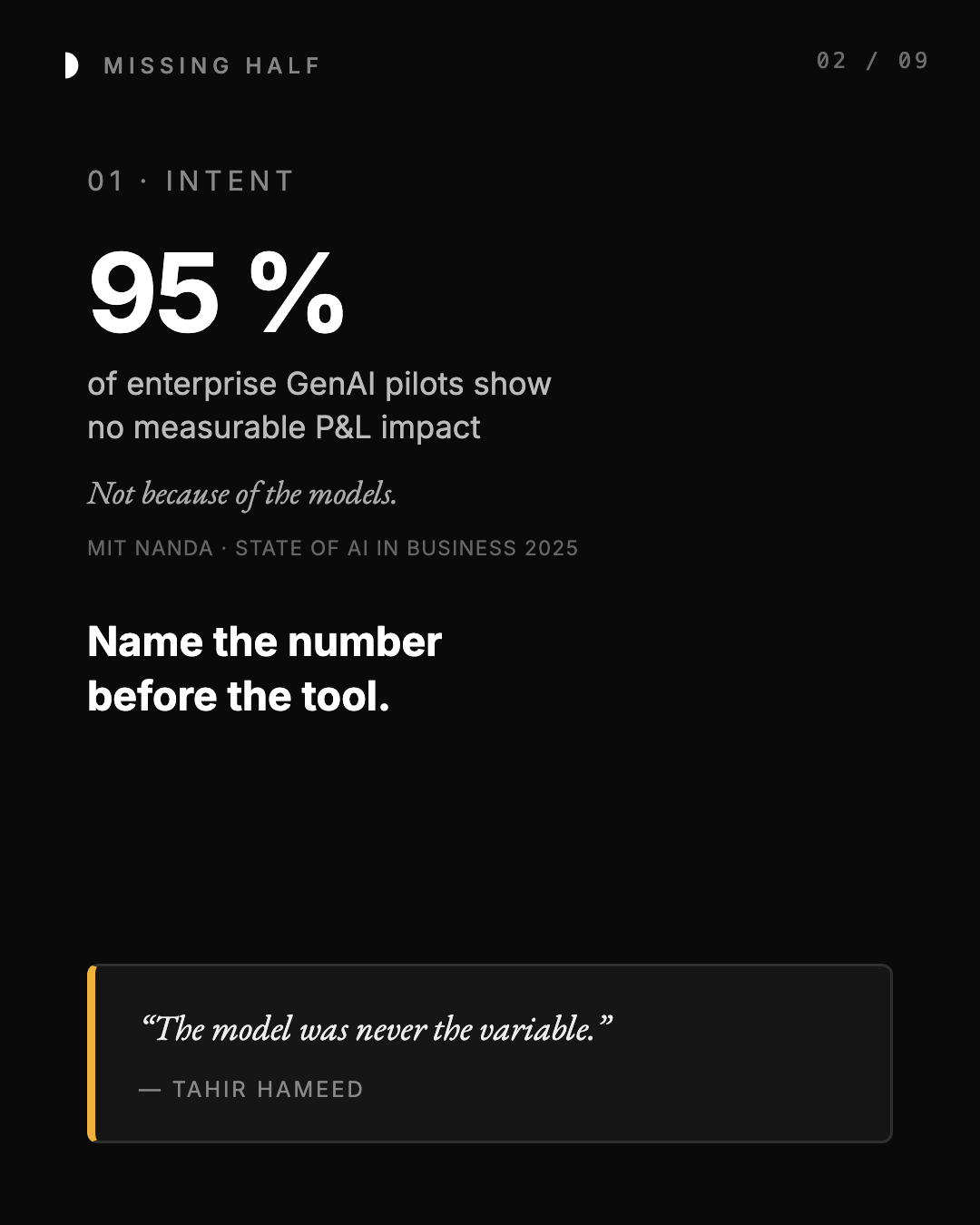
Intent: 95 percent of GenAI pilots show no measurable P&L impact (MIT). Failure starts before the model.
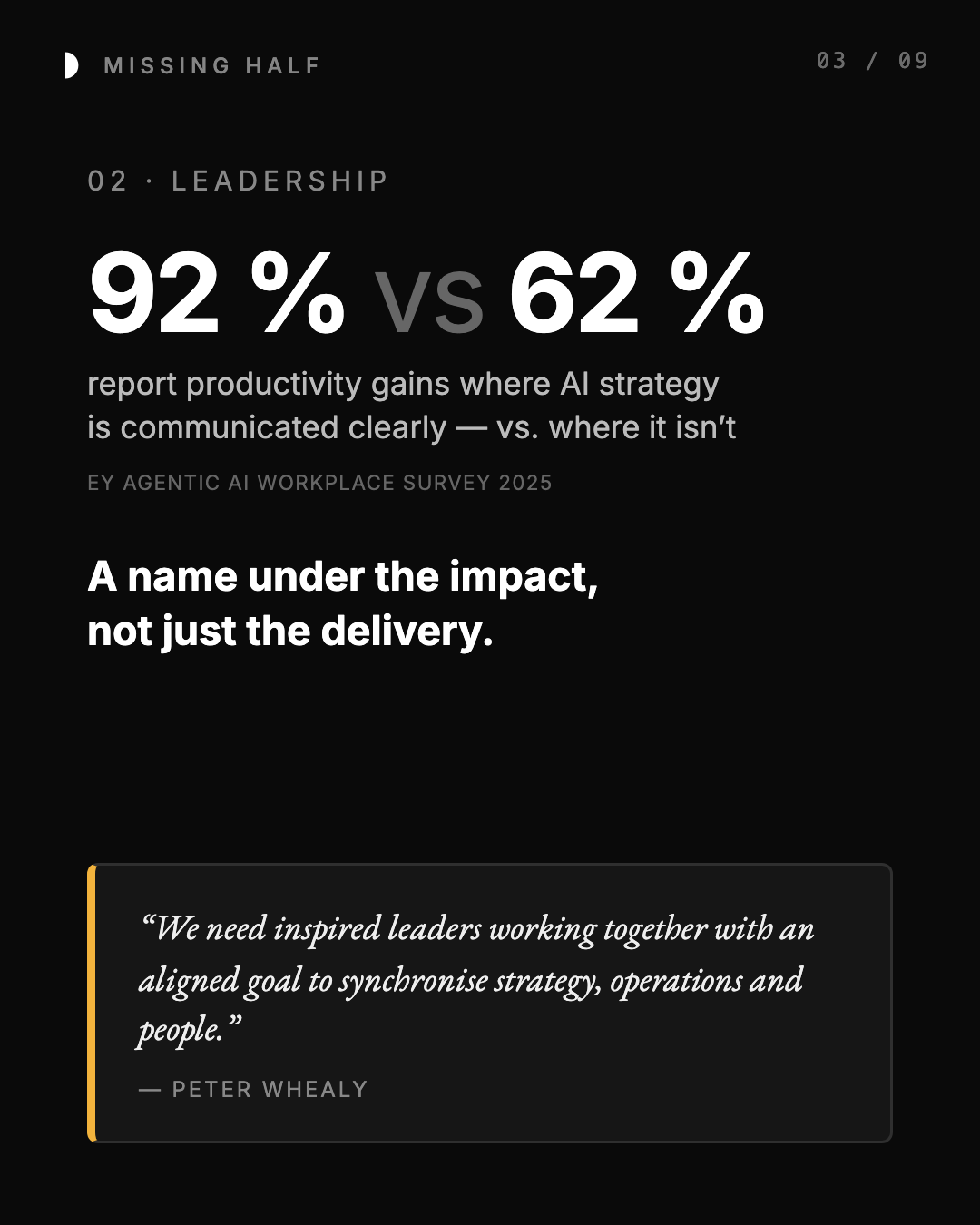
Leadership: where AI strategy was communicated clearly, 92 percent report productivity gains. Where it wasn't, 62 percent (EY).
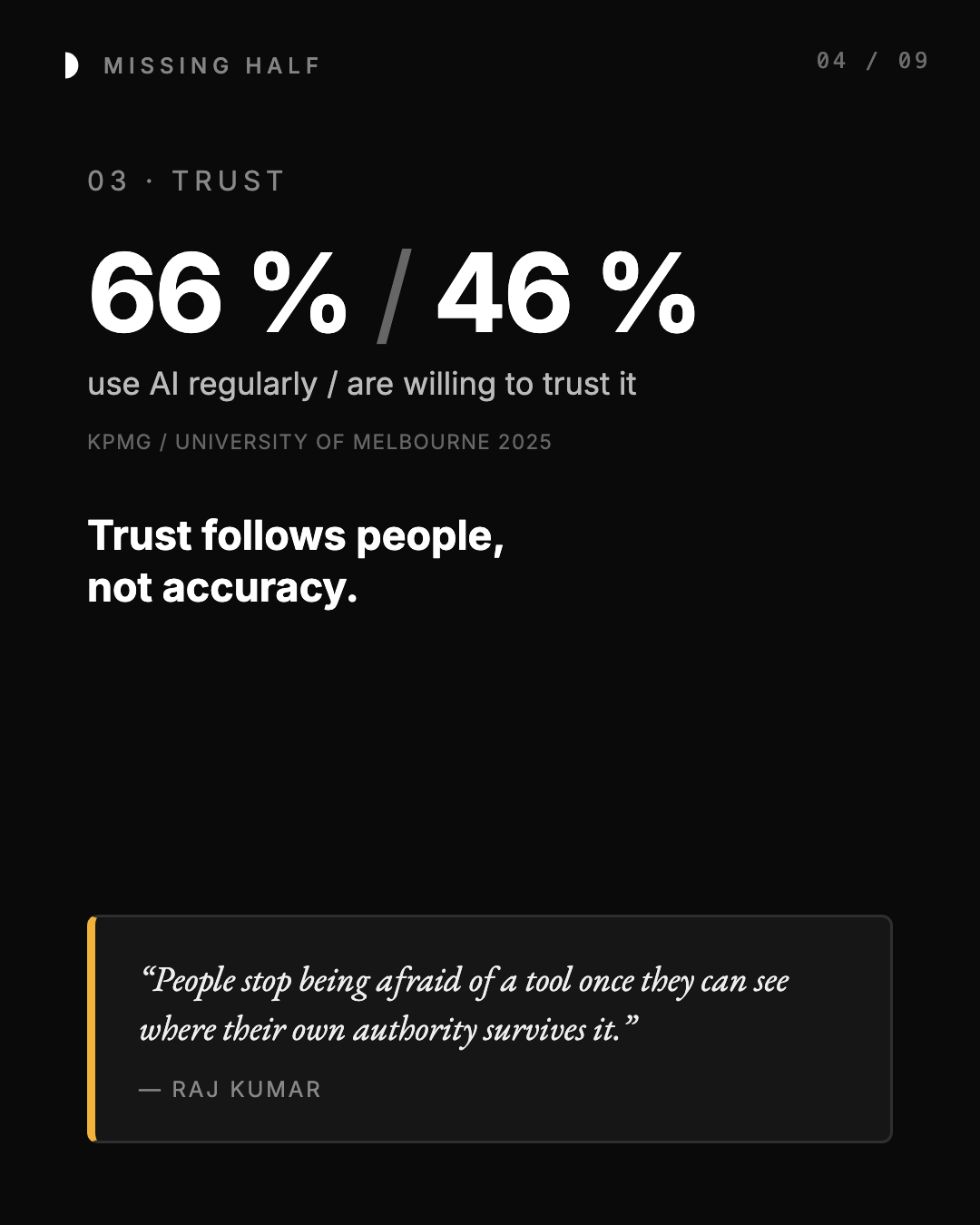
Trust: 66 percent use AI regularly. 46 percent are willing to trust it (KPMG). Trust follows people, not accuracy.
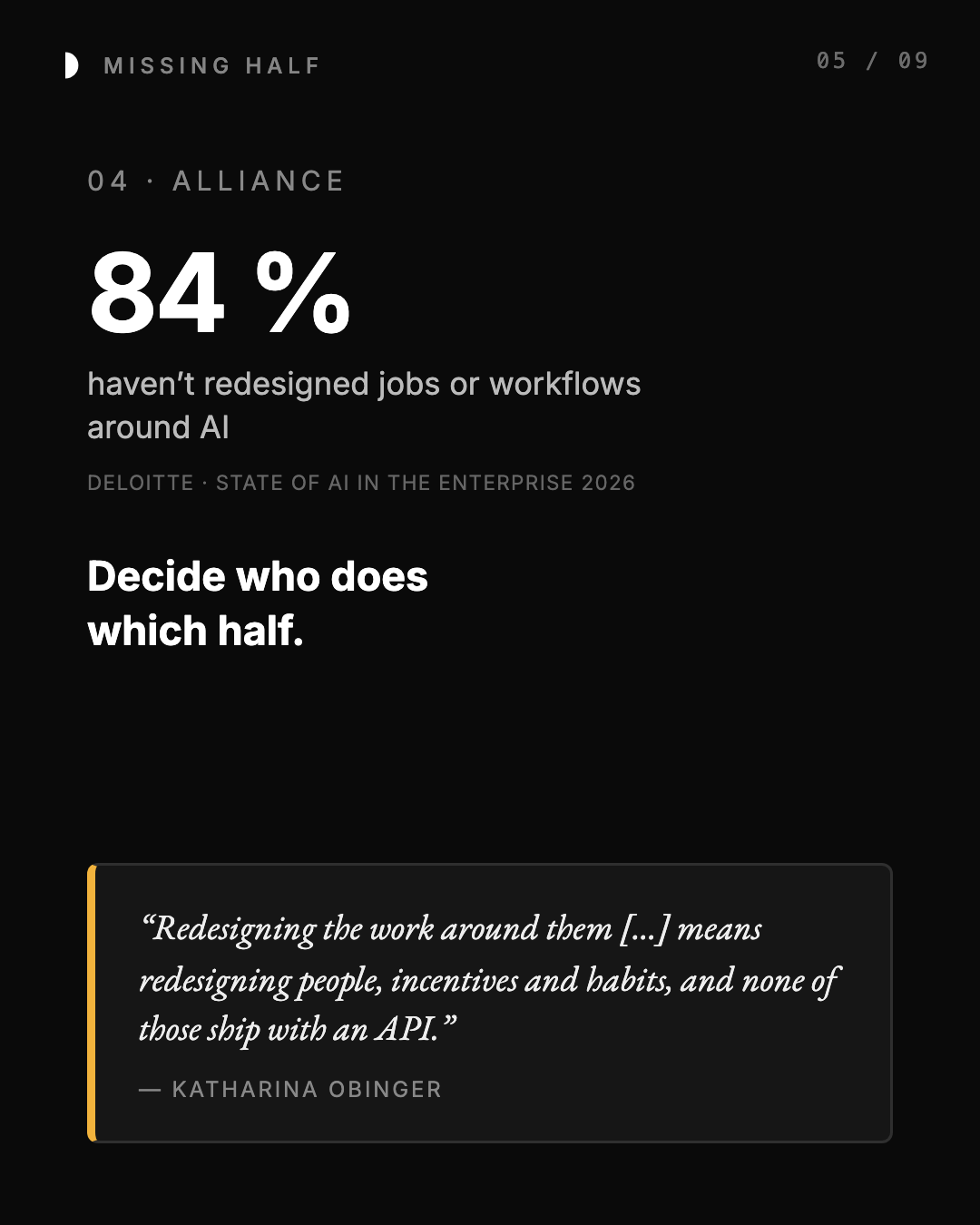
Alliance: 84 percent haven't redesigned jobs or workflows around AI (Deloitte). Adding is free. Deciding who does which half isn't.
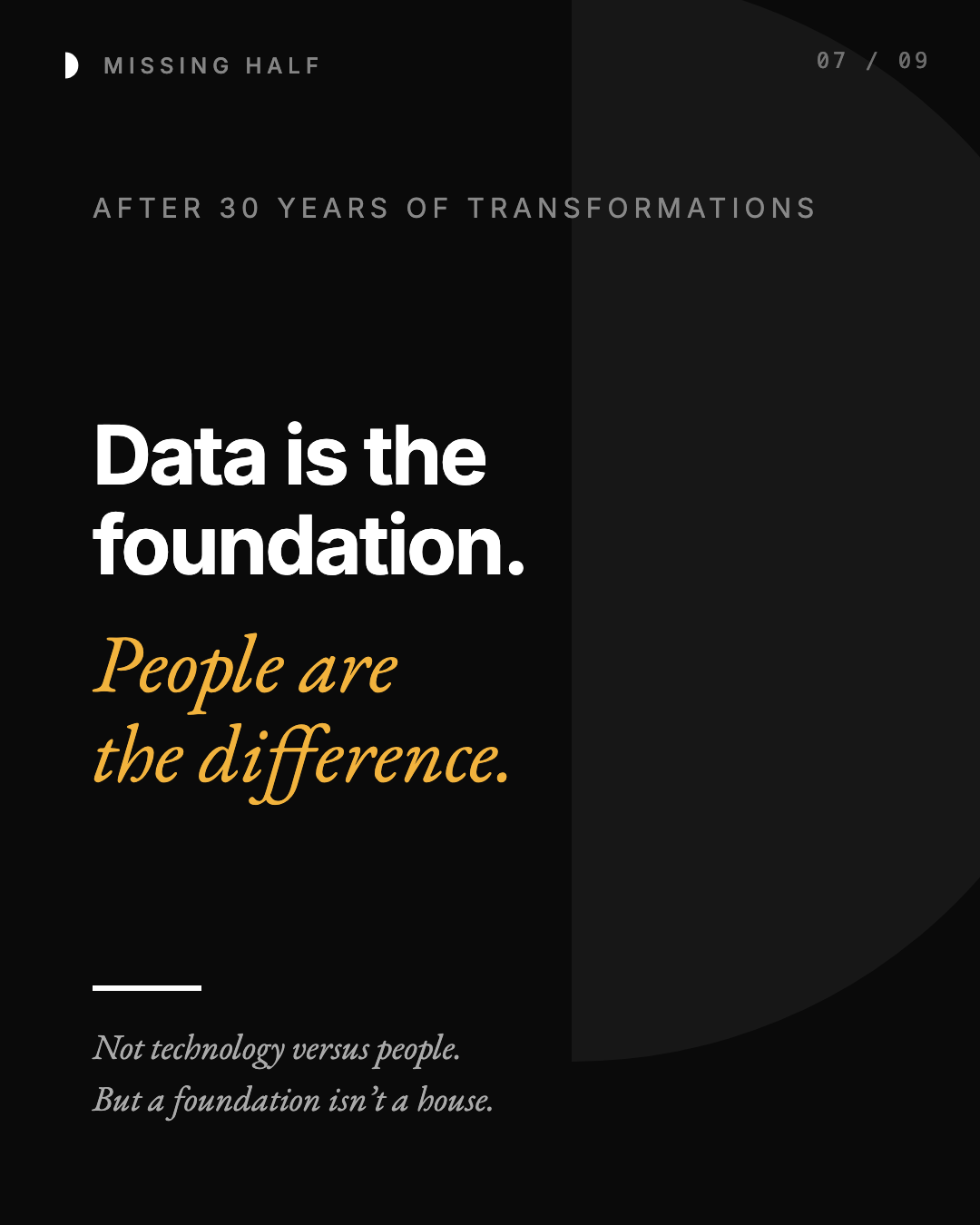
After 30 years of transformations, this is what I'd sign: data is the foundation. People are the difference.
Not technology versus people. The machine is one half, real and powerful. But a foundation isn't a house.
And here is the sentence:
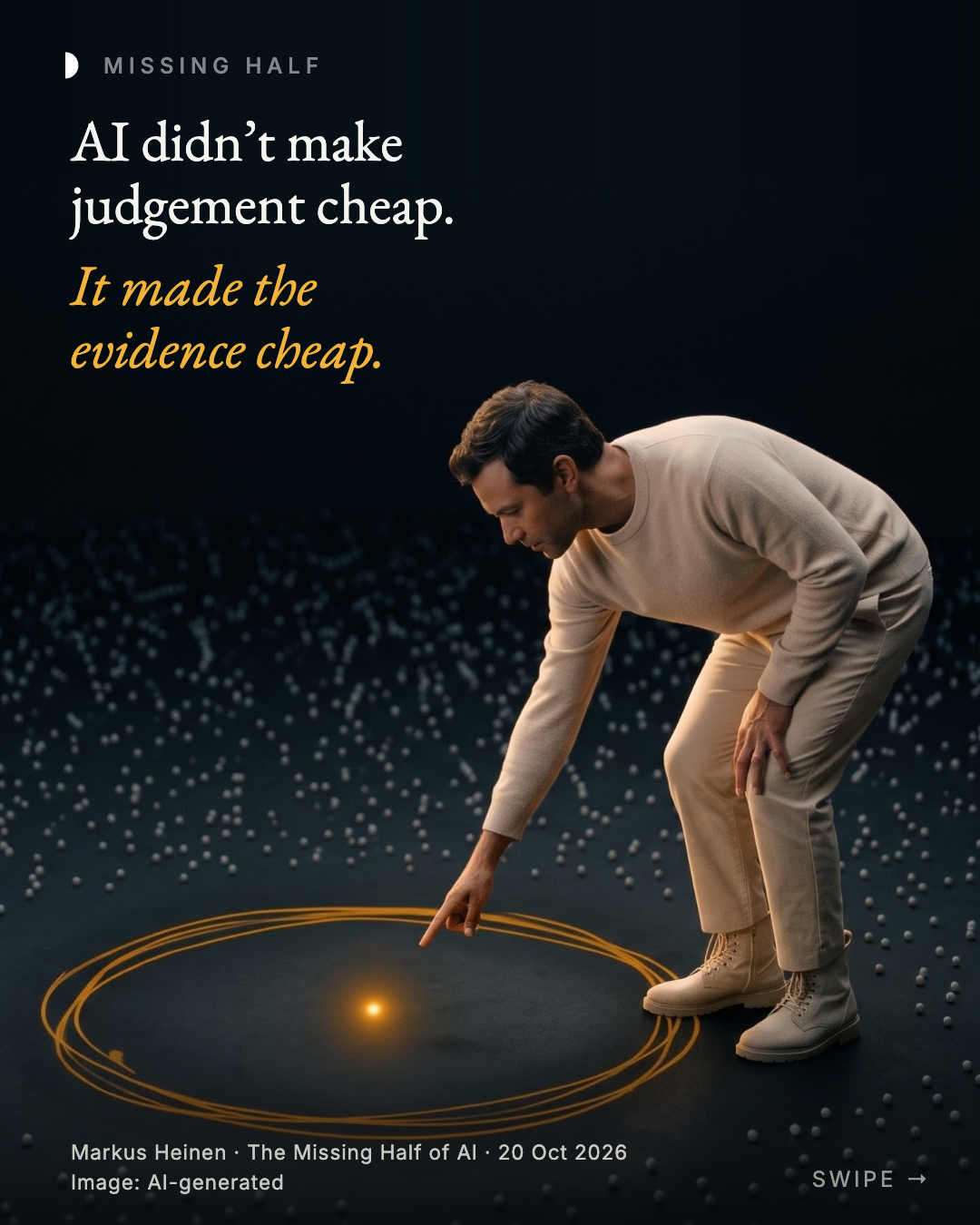
AI didn't make judgement cheap. It made the evidence cheap.
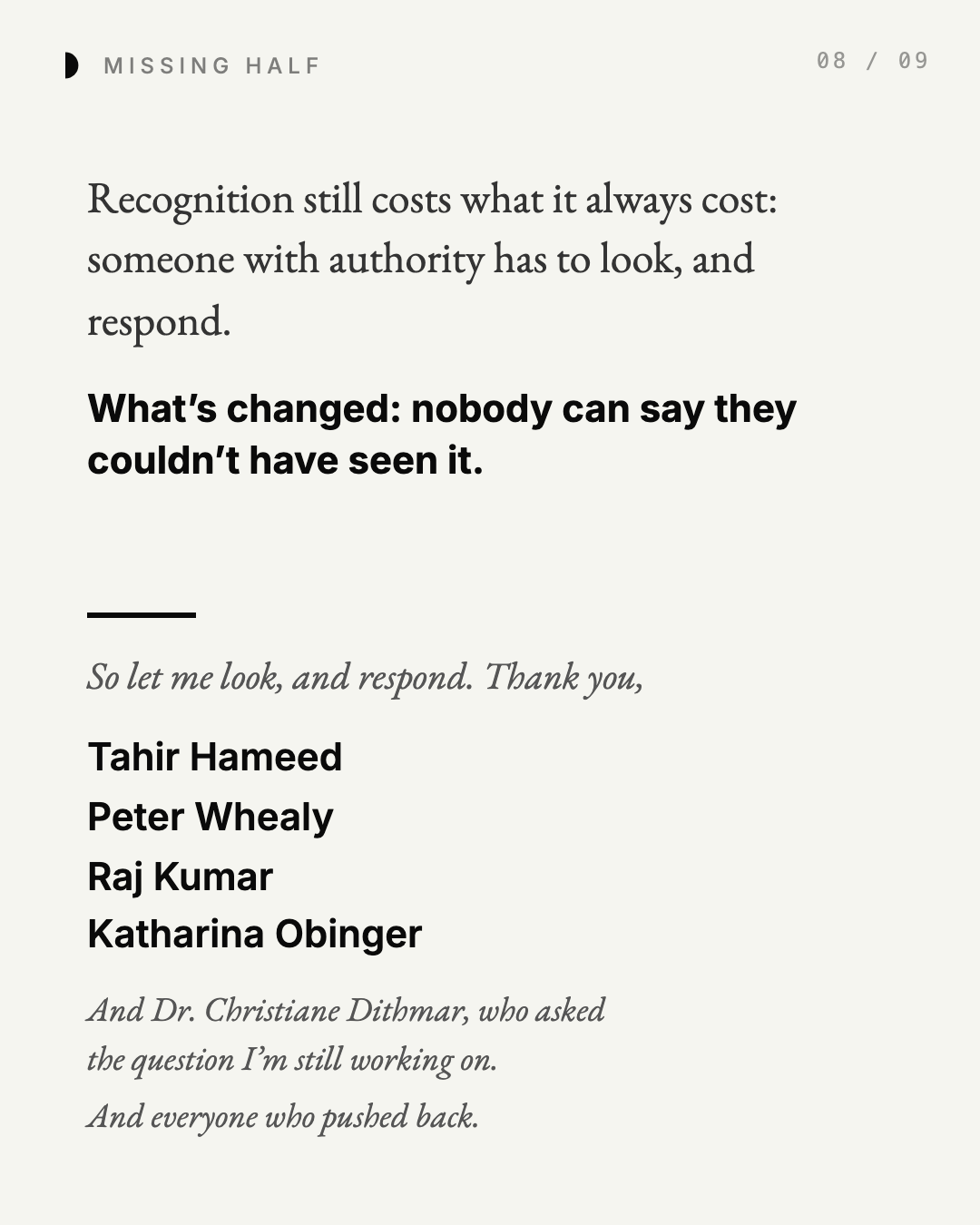
Recognition still costs what it always cost: someone with authority has to look, and respond. What's changed is that nobody can say they couldn't have seen it.
So let me look, and respond: some of the best lines of this series weren't mine. Thank you, @Tahir Hameed, @Peter Whealy, @Raj Kumar, @Katharina Obinger. And @Dr. Christiane Dithmar, who asked the question I'm still working on. And everyone who pushed back. A machine can show me who said what. Saying thank you is still my job.
Two halves. One whole.
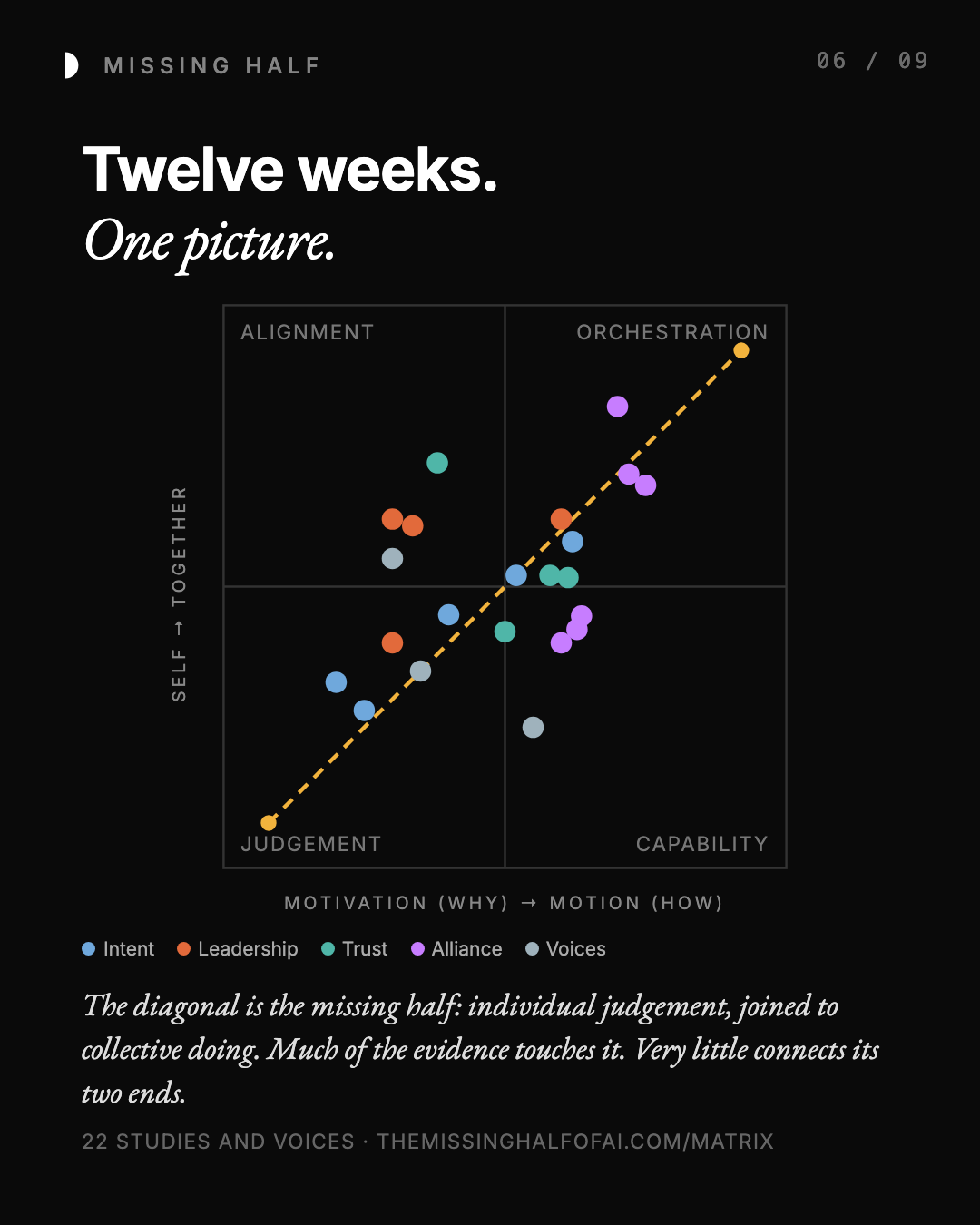
The series ends here. The work doesn't. That sentence about evidence is what I'll keep writing about. The full picture, every study and every voice on two axes, is linked in the first comment.
💬 Which of the four is the missing half where you work? One word is enough.
9 frames · scroll sideways · Download as PDF